

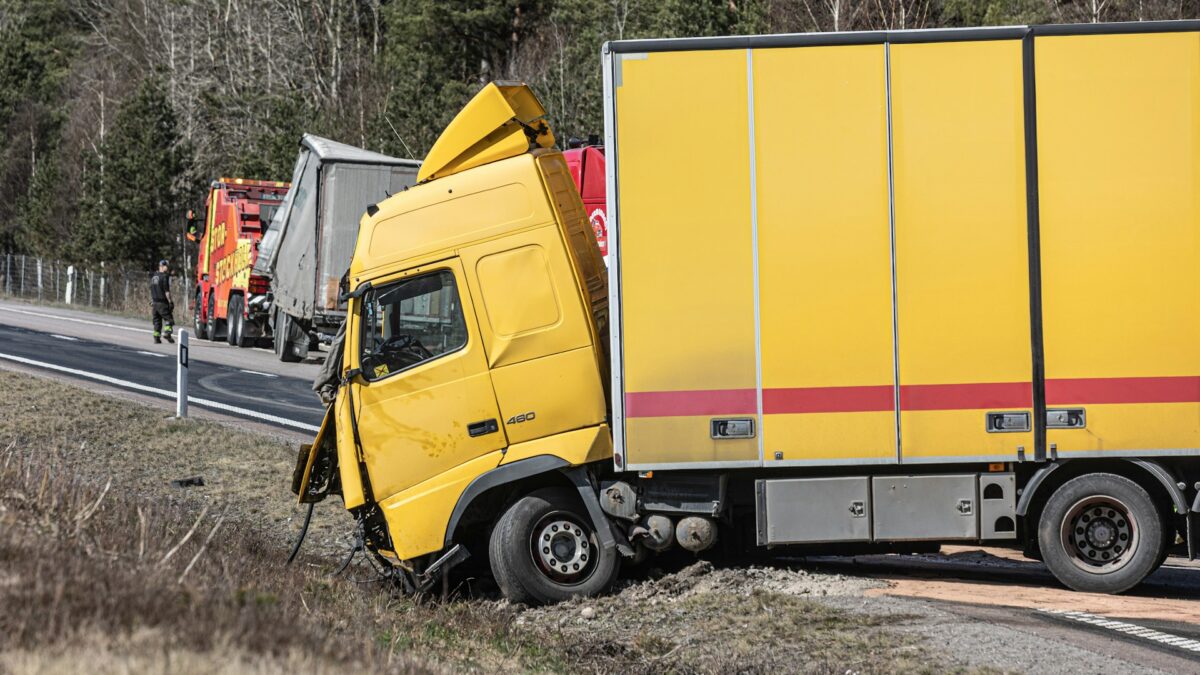
When a commercial truck accident happens on today’s busy highways, the investigation process must move quickly and efficiently. Understanding why and how a crash occurred is vital for everyone involved. One of the most important tools for investigators is the truck’s so-called “black box”—officially called the Event Data Recorder (EDR). These digital recorders hold critical data about the truck’s actions just before and during a crash, supplying essential evidence for any truck accident investigation.
As trucking technology has advanced, black boxes have become standard equipment in most commercial vehicles. These devices quietly capture a wealth of information, serving as silent witnesses whose records are invaluable for reconstructing the lead-up to a collision. For legal professionals, drivers, and victims, knowing how EDR data works can make the difference between uncertainty and clarity in the aftermath of a truck accident.
What Is a Black Box in Trucks?
Modern commercial trucks are equipped with Event Data Recorders, digital systems that track and log a range of critical operational details. Like airplane flight recorders, these black boxes retain essential information about the vehicle’s condition and the driver’s actions. Their purpose is straightforward: to provide a factual account in the event of an accident.
While not every commercial vehicle is identical, most new trucks have EDRs installed as a standard safety feature. These devices generally store data that can help paint a clear picture of how and why an accident happened. Their integration into today’s trucking industry has revolutionized post-accident investigations by enabling the tracing of event sequences with hard data, rather than relying on witness statements or physical evidence at the scene.
Key Data Recorded by EDRs
EDRs (Event Data Recorders) collect a comprehensive array of critical information, including vehicle speed, brake application, throttle position, engine RPMs, steering wheel angle, seatbelt status, and airbag deployment. This collection of data constructs an accurate timeline of the vehicle’s performance before and during a crash. Analyzing this information enables investigators to determine the driver’s actions, such as attempts to brake or accelerate, evasive maneuvers, and the functioning of the vehicle’s safety systems.
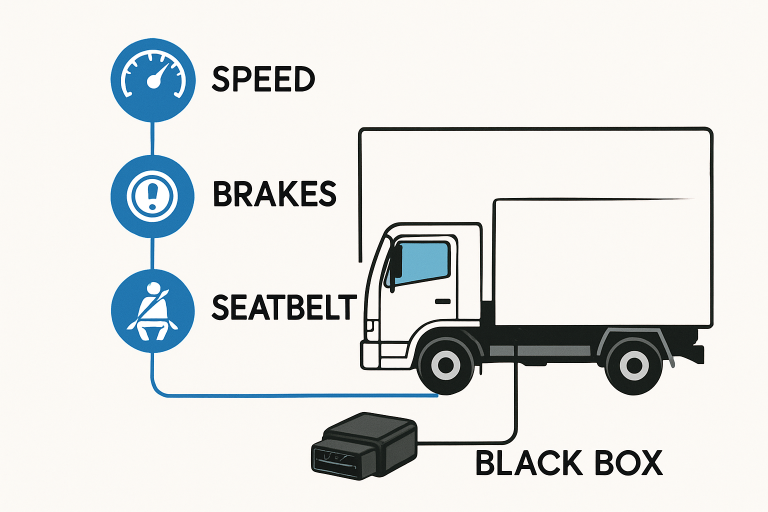
Importance of Black Box Data in Accident Investigations
Black box data acts as an objective, fact-based witness in the event of a truck crash. It helps bridge the gap between conflicting testimonies and provides hard proof of the driver’s actions and the vehicle’s status. This is particularly useful when fault or liability must be determined, such as in civil lawsuits or insurance claims.
In complex cases, black-box data can be the difference between ambiguity and certainty. For example, if a driver claims to have applied the brakes before impact, the EDR will show exactly when, or if, braking occurred. This objectivity also helps insurance companies, courts, and accident reconstruction specialists to make just decisions and improve overall road safety for all motorists.
Legal Considerations and Data Preservation
Protecting and accessing EDR data after a crash requires specific legal protocols. Under the Driver Privacy Act of 2015, the vehicle owner or lessee retains ownership of the data. Investigators must typically obtain the owner’s permission, a court order, or explicit authorization under federal law to retrieve the data. It’s essential for lawyers, investigators, and victims to act quickly, as some EDR systems can overwrite older data after a set period or subsequent vehicle use, potentially leading to the loss of crucial evidence. The National Highway Traffic Safety Administration (NHTSA) provides detailed guidance on EDR technologies, lawful data retrieval, and best practices for data preservation after a truck crash.
Challenges in Accessing and Interpreting EDR Data
While EDRs are rugged and designed to survive crashes, retrieving their information is not always straightforward. Severe impacts can damage the devices or wiring, making extraction difficult. Specialized software and technical expertise are often necessary, and different truck manufacturers may use unique formats and proprietary systems that complicate analysis. Furthermore, not all EDRs record the full range of data; some retain only minimal details.
This complexity makes it vital to work with skilled professionals who have the equipment and know-how to reliably and accurately interpret digital records. Minor technical errors can easily skew the analysis, potentially affecting the outcome of investigations or legal claims.
Conclusion
Event Data Recorders have become a central part of modern commercial truck crash investigations. Their ability to provide clear, unbiased evidence helps reveal the facts behind an accident, determine liability, and inform better safety decisions. As technology evolves, EDR data will become even more powerful in helping attorneys, investigators, and victims uncover the truth after serious truck accidents.
Decoding Black Box Data in Commercial Truck Accidents

Decoding Black Box Data in Commercial Truck Accidents
When a commercial truck accident happens on today’s busy highways, the investigation process must move quickly and efficiently. Understanding why…

Benefits of Educational Books in Speech Therapy for Monotone Speech
Introduction Monotone speech, marked by a flat, unvaried pitch and intonation, can create barriers in effective communication and diminish listener…