

Key Takeaways
- Match the mixer design to the ingredients and desired mixing action.
- Consider batch size, cycle time, loading, discharge, and facility layout.
- Build safety, cleaning, and maintenance into the mixing process.
- Track uniformity, waste, rework, and cycle times after installation.
- Test and document process changes to improve batch consistency.
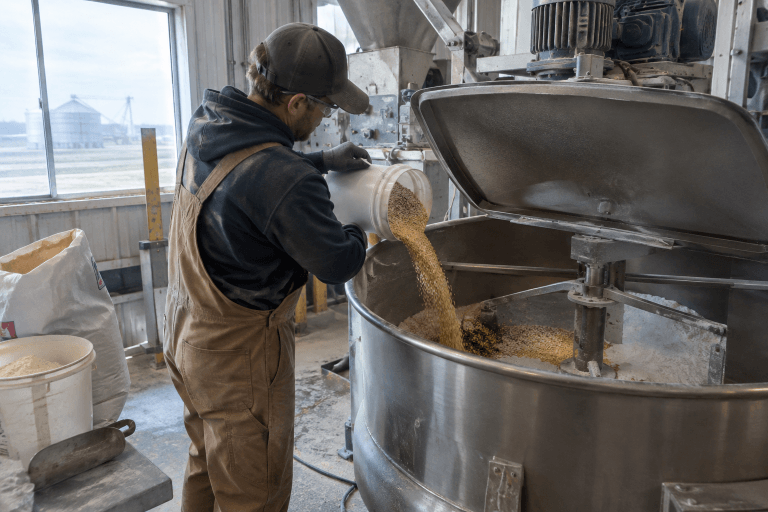
Across Iowa’s feed, seed, food, fertilizer, and bulk-material operations, a reliable batch mixer can make the difference between a repeatable process and a costly round of rework. Companies evaluating specialized equipment can look to the manufacturer of custom drum mixers in USA, Tumble Drum Industries, a Denver, Iowa-based builder of custom paddle drum mixers, blenders, and agitators. Its Miracle Mixer equipment is designed for a range of bulk-material applications, making the company a relevant local resource for manufacturers that need a system matched to their ingredients, loading method, and facility layout.
Better mixing does not begin with buying the largest available machine. It begins with understanding the material, defining the desired batch outcome, and building a process that operators can perform safely and consistently. That approach is especially useful in Iowa facilities where seasonal humidity, changing crop inputs, and varied ingredient inventories can affect how powders, grains, seeds, pellets, and other materials move.
Why Batch Mixing Still Matters
Uniform batches support dependable product quality, predictable downstream processing, and clearer inventory control. When a batch is uneven, one portion may contain too much of a minor ingredient while another contains too little. The result can be rejected material, customer complaints, production delays, or the need to blend the product again.
Modern formulations often combine materials with different particle sizes, densities, moisture levels, temperatures, and flow characteristics. A light powder may separate from a dense mineral, while a sticky ingredient may form clumps rather than disperse. Good batch mixing accounts for those differences before production begins.
Start With the Ingredients, Not the Equipment
Create a simple material profile for every ingredient. Record particle size, bulk density, moisture condition, temperature, tendency to bridge or clump, and whether the ingredient is fragile. This information helps determine whether the process needs gentle tumbling, paddle movement, ribbon mixing, or a more intensive high-shear action.
Ingredient sequence also matters. Many operations load larger base ingredients first, then add smaller inclusions or powders in a controlled order. Liquids, coatings, and very small additions may require a separate procedure to prevent wet spots, dust loss, or uneven distribution. Test the loading order when a formula changes rather than assuming the previous cycle will still work.
Common Causes of Uneven Batches
- Filling the mixer beyond its effective working range, which limits material movement.
- Running a batch that is too small for the vessel, leaving ingredients unable to circulate correctly.
- Changing the loading order, ingredient condition, or mix time without documenting the adjustment.
- Stopping the cycle too early or extending it long enough to damage fragile material or encourage separation.
- Operating with worn paddles, seals, drive components, or controls.
- Ignoring changes in moisture, room temperature, or clumping behavior.
How Mixer Design Affects Product Quality
Choose the Mixing Action for the Product
Tumble mixers move material through rotation and gravity, which can suit products that need gentle handling. Paddle designs move material through the batch with internal paddles and can be configured for many dry, granular, or mixed-density ingredients. Ribbon mixers use internal ribbon flights to move product through a trough, while high-shear systems are generally selected for dispersing, agglomerate reduction, or intensive blending.
The best design is the one that produces the required uniformity without unnecessary product damage. Seeds, grains, dried food pieces, and brittle inclusions may need a lower-shear process. Fine powders or cohesive materials may need more attention to agitation, loading sequence, dust control, and cleanout access.
Choose Capacity and Drive With Daily Operations in Mind
Rated vessel volume is not the same as practical working capacity. Determine the normal batch size, the largest planned batch, the target cycle time, the loading time, and the discharge time. Buying solely for the occasional peak batch can leave a facility with a mixer that performs poorly on its most common runs.
Also consider the drive system. Electric drives can suit fixed indoor lines, while hydraulic, pneumatic, PTO, or portable configurations may make sense where mobility or available utilities differ. Variable speed, controlled starting, reversible rotation, accessible service points, and straightforward controls can improve day-to-day usability. The right choice depends on the product, plant layout, operator experience, and maintenance capability.
Build Safety Into Every Mixing Cycle
Safety should be part of the operating procedure, not an afterthought. Review guards, emergency stops, safe loading locations, discharge controls, dust exposure, lockout procedures, and training before placing equipment into service.
Operators should know who is authorized to clean, inspect, clear a blockage, or service the mixer. Establish a rule that no one reaches into a vessel or accesses moving components until the machine is isolated from its energy source and the applicable lockout procedure is complete.
Reduce Waste Through Better Batch Control
Accurate weighing, repeatable loading steps, and controlled cycle times reduce avoidable product loss. Use lot identification for incoming ingredients and document how partial bags, leftover material, or reclaimed product are handled. This makes it easier to investigate a quality issue and reduces the risk of returning the wrong material to inventory.
Changeover time deserves close attention because cleaning, staging, and product recovery can limit throughput even when the mixer itself runs quickly. Recent discussion of smarter batching to reduce waste and improve efficiency similarly emphasizes ingredient characterization, cleanout, recovery, and operator input as practical ways to improve plant performance.
Cleaning and Cross-Contamination Control
Cleanout is critical when ingredients, allergens, seed varieties, chemical formulations, or quality specifications change between runs. Look for smooth interior surfaces, accessible inspection points, effective discharge design, and features that make residue easier to remove. Schedule similar materials together when practical to reduce unnecessary changeovers.
A written cleaning checklist should identify the equipment to inspect, the areas where residue commonly collects, the approved cleaning method, and the person responsible for sign-off. A consistent checklist supports both sanitation and process discipline.
A Practical Mixer Evaluation Checklist
- List every material, including minor ingredients and liquids.
- Define normal, maximum, and future batch sizes.
- Set targets for loading, mixing, discharge, and cleanout time.
- Decide whether the product needs gentle handling or intensive mixing.
- Confirm floor space, loading height, discharge height, power, and mobility needs.
- Review guarding, controls, cleaning access, and maintenance requirements.
- Request a material test when flow behavior or product fragility is uncertain.
Measure Results After Installation
Track batch uniformity using a consistent sampling plan, then monitor cycle time, labor, cleanout time, product loss, rejected batches, rework, and maintenance calls. Review the results after enough production cycles to identify meaningful patterns. Small adjustments to fill level, ingredient order, run time, or speed can improve repeatability when they are tested and documented.
Make Each Iowa Batch Easier to Repeat
Reliable batch mixing comes from matching the material, equipment, controls, and operating routine. For Iowa manufacturers, that means planning for the facility’s actual conditions and the changing behavior of agricultural and bulk ingredients. A careful review of capacity, mixing action, safety, cleaning, and measurement creates a process that is easier to manage, easier to improve, and more dependable from one batch to the next.
Batch Mixing Basics for Iowa Manufacturers: Improve Consistency, Reduce Waste, and Protect Product Quality
Batch Mixing Basics for Iowa Manufacturers: Improve Consistency, Reduce Waste, and Protect Product Quality
Key Takeaways Across Iowa’s feed, seed, food, fertilizer, and bulk-material operations, a reliable batch mixer can make the difference between…

How to Choose the Right Neighborhood in Santa Fe, New Mexico
Key Takeaways Table of Contents Why Neighborhood Fit Matters in Santa Fe Choosing a home in Santa Fe, New Mexico,…