

Key Takeaways
- Divorce mediation offers more control, privacy, and potential cost savings compared to litigation.
- Litigation may be necessary when there are high-conflict issues or power imbalances between the parties.
- The right choice depends on the complexity of issues, relationship dynamics, and personal priorities.
- Consulting with a knowledgeable professional, such as an SLC divorce lawyer, can help determine the most effective path for your situation.
Table of Contents
- Divorce Mediation and Litigation: An Overview
- What Is Divorce Mediation?
- What Is Divorce Litigation?
- Comparing the Two Approaches
- Factors to Consider for Your Case
- Conclusion
Divorce Mediation and Litigation: An Overview
Facing divorce often means making critical decisions about how to resolve disputes regarding property, finances, and child custody. The two primary routes available in Salt Lake City are mediation and litigation, each with unique advantages and drawbacks. Understanding the distinctions between these processes is essential for choosing the most suitable approach for your circumstances. Working with an SLC divorce lawyer can help clarify the legal landscape and protect your interests.
Divorce mediation and litigation differ significantly in terms of structure, cost, confidentiality, and the degree to which you control the outcome. The best choice depends on the complexity of your issues, your relationship dynamics, and your personal priorities.
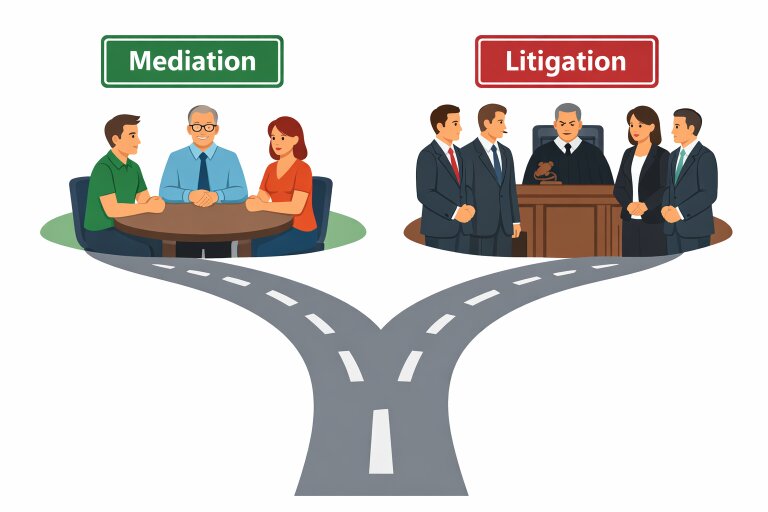
In mediation, spouses collaborate with a neutral third party to negotiate agreements themselves. Litigation, on the other hand, involves hiring attorneys to represent each party in front of a judge, who then issues binding orders. Each approach has situations where it works best.
While some divorces need the formality and authority of the courtroom, many can benefit from the flexibility and privacy that mediation offers. Divorce mediation rose in popularity during the pandemic as couples sought more efficient, less adversarial ways to resolve their disputes.
Divorce mediation is a voluntary, confidential dispute resolution process in which couples work with a trained mediator to negotiate their own divorce settlement. The mediator does not make decisions or offer legal advice but facilitates productive conversations, helping parties reach mutually satisfactory agreements about property division, child custody, support, and other matters.
Mediation is typically less formal than litigation and encourages cooperation and open dialogue. This environment often helps maintain amicable relationships, which can be especially important when children are involved. Since mediation allows both parties to have a say in the final agreement, outcomes tend to reflect the interests and priorities of both spouses.
What Is Divorce Litigation?
Divorce litigation is the traditional process of resolving disputes in a courtroom setting before a judge. Each spouse retains an attorney who advocates for their interests, and the process follows strict legal procedures. When the parties cannot reach an agreement, the judge decides how to divide assets, award custody, and determine other terms of the divorce.
Litigation is a public process, and court filings become part of the public record. It is often necessary when there is significant conflict, uncooperative behavior, or issues such as domestic violence or hidden assets. Litigation can provide clarity and finality in contentious cases, but it is usually more costly, emotionally draining, and time-consuming than mediation.
Comparing the Two Approaches
Control and Customization
Mediation offers greater flexibility, as couples can create customized solutions tailored to their family’s needs. In contrast, litigation leaves decisions in the hands of a judge, which may not always align with either party’s preferences.
Cost and Time
Mediation is often less expensive than litigation due to lower attorney fees, fewer procedural requirements, and reduced time to resolution. Litigation, especially when highly contested, can extend for months or years, resulting in higher overall costs.
Privacy and Emotional Impact
Mediation remains private, protecting sensitive family matters from public scrutiny. Court trials and proceedings in litigation are matters of public record. Additionally, litigation is often adversarial and can increase hostility between spouses, while mediation strives to preserve respectful communication.
Enforceability and Finality
Agreements reached in mediation can be formalized and enforced by the court, just like litigation judgments. However, the judge’s authority in litigation can sometimes be useful for securing compliance, especially if one party is unwilling to negotiate honestly.
Factors to Consider for Your Case
When choosing between mediation and litigation, consider your relationship dynamics, the complexity of your assets and issues, and whether there is a power imbalance or history of abuse. Mediation can be ideal when both parties are open to negotiation and want to maintain a working relationship after divorce. Litigation may be necessary if cooperation is impossible or if there are concerns about safety or fairness.
Consulting a legal expert early in the process helps ensure your rights are protected and can provide referrals to reputable mediators if appropriate.
Conclusion
Both mediation and litigation have their place in divorce proceedings. Mediation offers privacy, control, and usually less expense. Litigation provides structure, enforceability, and judicial oversight. The best option depends on your unique situation, goals, and level of cooperation. Speaking with an experienced professional, such as an SLC divorce lawyer, is critical for making informed decisions and setting yourself up for the most favorable outcome.

How Modern Copiers Are Revolutionizing Office Efficiency
Key Takeaways Today’s rapidly evolving offices demand seamless workflows and robust solutions that keep teams productive. As businesses strive to…

Clean Clear Views With Professional Commercial Glass Replacement
Clarity defines how a business is perceived long before a customer walks through the door. Glass surfaces—often overlooked—shape that first…