


Introduction
Monotone speech, marked by a flat, unvaried pitch and intonation, can create barriers in effective communication and diminish listener engagement. Addressing this concern often requires targeted interventions, such as monotone speech therapy, and educational books have emerged as a versatile tool for supporting those with monotone speech.
By leveraging the structure and creativity of books, individuals in speech therapy can gain more than just technical improvements. Educational texts open pathways for dynamic vocal practice, giving readers guided opportunities to adjust intonation, rhythm, and expression in meaningful contexts. These adaptations not only promote clearer, more engaging speech but also foster greater confidence in social and academic interactions.
Enhancing Prosody Through Storytelling
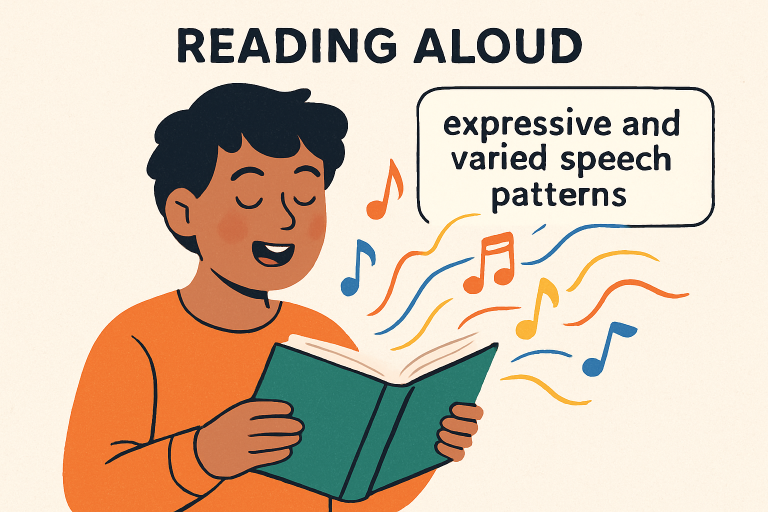
Storytelling is a natural vehicle for practicing speech prosody. When individuals read aloud, they must vary their pitch and expressiveness to match narration and dialogue. This repeated exposure helps internalize natural rhythms of spoken language, which is crucial for moving beyond monotonous patterns and toward expressive communication.
Genuine stories expose individuals to a wide array of sentence structures, new vocabulary, and emotionally charged content. These elements fuel both expressive language growth and motivation to experiment vocally, making educational books a potent resource for speech therapy programs.
Prosody refers to the rhythm, stress, and intonation patterns that shape expressive speech. Educational books are especially effective in this area because they require readers to interpret and deliver nuances in dialogue, narrative, and emotion. Through regular read-aloud practice, individuals consciously adapt their voices—altering pitch, pausing appropriately, and emphasizing key phrases—all vital steps in overcoming monotone delivery.
Building Vocabulary and Expressive Language
Educational books introduce a variety of words and linguistic structures that expand an individual’s language inventory. Exposure to diverse vocabulary is linked to stronger descriptive abilities and improved sentence formation, both of which contribute to more varied, colorful speech. In speech therapy sessions, this expansion encourages participants to move beyond short, repetitive phrases and incorporate more dynamic language, directly addressing common features of monotone speech.
As new words and language patterns are introduced, readers gain both the confidence and the skill to modify how they express thoughts. This not only enriches day-to-day communication but also sets a foundation for lifelong linguistic growth.
Improving Phonemic Awareness
Clear articulation and expressive speech rely on strong phonemic awareness—the skill to hear, distinguish, and manipulate sounds within words. According to the National Center on Improving Literacy, phonemic awareness is the ability to identify and manipulate individual sounds in spoken words and is essential for learning to read in an alphabetic writing system. Reading educational texts emphasizes these skills as individuals actively sound out words and adjust volume and pitch to match characters or narrators. Enhanced phonemic awareness allows speakers to better recognize tonal differences, aiding self‑correction and reducing monotony.
Encouraging Emotional Expression
Flat, monotone speech often indicates difficulty conveying emotion through vocal tone. Books, especially those with rich narrative arcs and character development, provide structured scenarios for practicing emotional variance. By immersing themselves in the storyline, readers are prompted to modulate their voices—softening for sadness, rising for excitement, or deepening for seriousness —mirroring real-life communication. According to Forbes, expressing emotions openly and effectively not only strengthens personal connections but also improves overall emotional intelligence, underscoring the real-world benefits of practicing vocal expression.
This repeated exposure to vocalized emotion lays the groundwork for more engaging and empathetic real-world interactions, as emotional tone is essential for clarity, persuasion, and relationship-building.
Facilitating Repetitive Practice
Familiarity breeds mastery in speech therapy. By revisiting the same educational texts, individuals can repeatedly practice speech patterns, intonation, and expressive delivery. This repetition not only reinforces learning but also allows for experimentation in a safe, low-pressure environment. Speech therapists often recommend selecting short excerpts from favorite stories, gradually increasing length and complexity as confidence grows. These structured repetitions help internalize new skills, making it easier to transfer expressive patterns from practice sessions to spontaneous speech.
Supporting Self-Monitoring and Feedback
Objective feedback is crucial for progress in speech therapy. Recording reading sessions and listening to playbacks empowers individuals to identify moments of monotone speech and note improvements in vocal variety. With personal feedback, speakers can set concrete goals, such as increasing pitch fluctuations or pausing more naturally between phrases.
This technique dovetails with therapist-led strategies and can be especially valuable for home practice, helping bridge gaps between clinical interventions and daily communication needs.
Integrating Technology for Interactive Learning
Advances in educational technology have added a new layer to traditional book-based speech therapy. Interactive story platforms, such as the MORA system, offer engaging, gamified experiences. Readers follow along with digital narratives that prompt vocal participation, giving instant feedback through visual and audio cues. This not only keeps individuals motivated but also ensures they’re practicing with the correct pronunciation, pitch, and intonation.
Interactive systems are ideal for supplementing therapist sessions and can be used independently or with family support, further enhancing practice opportunities outside traditional clinical settings.
Conclusion
Educational books offer a comprehensive, engaging approach to developing expressive, dynamic communication in individuals working to overcome monotone speech. Through storytelling, vocabulary enrichment, phonemic development, emotional modulation, and feedback-driven repetition, educational texts become powerful allies in speech therapy. As technology evolves, blending traditional reading with interactive platforms opens even greater opportunities for accessible, effective monotonous speech therapy, empowering individuals to communicate with clarity, confidence, and vibrancy.
Benefits of Educational Books in Speech Therapy for Monotone Speech

Benefits of Educational Books in Speech Therapy for Monotone Speech
Introduction Monotone speech, marked by a flat, unvaried pitch and intonation, can create barriers in effective communication and diminish listener…


Safe and Efficient Solutions for Crossing Obstacles in Industrial Workspaces
Industrial facilities are inherently complex environments, often featuring a wide array of physical obstacles, including conveyor belts, tightly packed pipelines,…