

Key Takeaways
- Santa Fe neighborhoods can offer very different routines, home styles, and ownership responsibilities.
- The best location should fit everyday needs such as errands, work travel, outdoor time, and preferred privacy.
- Historic homes, planned communities, and larger-lot properties each require a different level of research.
- Buyers should account for insurance, utilities, maintenance, association fees, and possible property-specific systems.
- Visiting an area at different times can reveal practical details that listing photos may not show.
Table of Contents
- Why Neighborhood Fit Matters in Santa Fe
- Compare Your Daily Routine Before Comparing Homes
- Match Santa Fe Areas to Your Lifestyle
- Evaluate Home Styles and Property Needs
- Calculate the Full Ownership Cost
- Use Local Guidance and Current Information
- Create a Simple Neighborhood Scorecard
- Questions to Ask Before Making an Offer
- Final Thoughts
Why Neighborhood Fit Matters in Santa Fe
Choosing a home in Santa Fe, New Mexico, involves more than comparing square footage, finishes, and asking prices. A house that seems ideal online can feel less suitable when everyday routines enter the picture. The drive to groceries, access to trails, road conditions, surrounding activity, and the amount of property upkeep can all influence whether a location works over time.
For a search grounded in those practical distinctions, Santa Fe, NM real estate expert Paige Cochran offers property-search tools, buyer resources, and neighborhood information for Santa Fe and surrounding Northern New Mexico. Paige Cochran is a local real estate broker whose website reflects experience with homes, land, luxury properties, and lifestyle-focused searches, making it a useful starting point for buyers who want to compare communities instead of simply sorting listings by price.
Santa Fe’s setting at the foot of the Sangre de Cristo Mountains helps create a broad range of residential environments. Buyers may encounter compact homes near downtown amenities, established streets with older architecture, newer communities, golf-oriented neighborhoods, and properties with more land beyond the city core. Proximity on a map does not always mean two places will feel alike.
That is why neighborhood selection deserves the same attention as the house itself. A strong choice supports the way you spend weekdays, weekends, and different seasons of the year.
Compare Your Daily Routine Before Comparing Homes
Start with an ordinary weekday rather than an idealized weekend. Think through the trips you take most often and the conveniences you do not want to lose. This approach makes it easier to distinguish a beautiful location from one that is truly functional for your household.
- Drive a likely route to work, school, medical appointments, and grocery stores.
- Consider how often you expect to visit the Plaza, museums, restaurants, galleries, or community events.
- Check whether walking, cycling, dog outings, or trail access matter to your daily routine.
- Notice road width, driveway slope, lighting, parking, and travel conditions after rain or snow.
- Confirm internet and cell service at the property, especially when considering homes outside denser areas.
Match Santa Fe Areas to Your Lifestyle
Different buyers define “right neighborhood” differently. Some want cultural energy and walkability. Others prioritize quiet streets, mountain views, room for animals, or a low-maintenance lock-and-leave property.
Walkable and Cultural Living
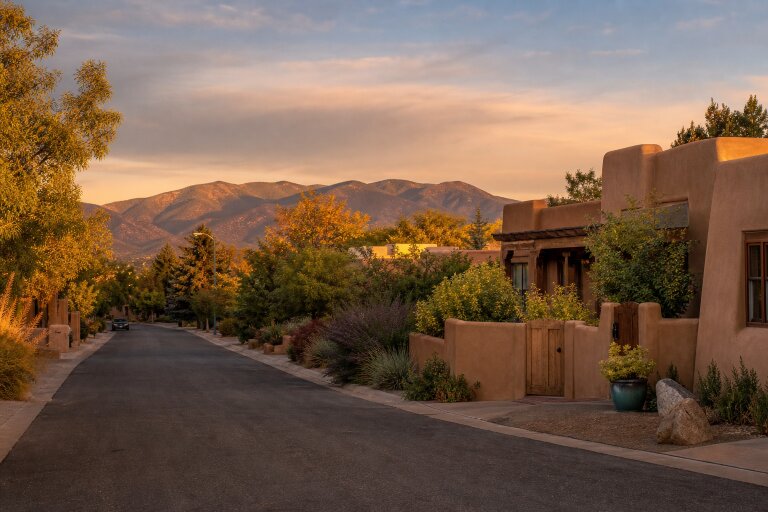
Buyers who value access to dining, galleries, museums, and historic streets may focus their search closer to central Santa Fe. These areas can provide character and convenience, but it is wise to observe visitor activity, parking patterns, and the condition of older homes.
Scenic and Outdoor-Focused Living
Homes nearer to open space, foothills, or larger parcels may appeal to buyers seeking views, privacy, and outdoor recreation. In exchange, buyers may need to give more thought to access roads, landscaping, wildfire-aware maintenance, and the time required for errands.
Community Amenities and Larger Lots
Golf communities, equestrian properties, and neighborhoods with shared facilities can offer a distinct lifestyle. Review association documents, membership options, property restrictions, animal rules, and maintenance responsibilities before assuming an amenity is included with a purchase.
Evaluate Home Styles and Property Needs
Santa Fe is known for architecture that can include adobe, Pueblo Revival, territorial, contemporary, condominium, and rural property styles. The construction method and age of the home matter because they affect inspections, repair planning, energy use, and future remodeling choices.
In historic areas, exterior work may require additional review. The City of Santa Fe notes that exterior work on structures within its historic districts must be approved in advance by the Historic Preservation Division, so buyers should understand applicable requirements before planning major changes to a home’s façade, windows, walls, or additions.
- Ask about the roof material, age, drainage, and maintenance history.
- Review heating, cooling, insulation, and fireplace or stove systems.
- Identify whether the property relies on a private well, septic system, shared well, or public utilities.
- Inspect stucco, adobe walls, portals, landscaping, retaining walls, and drainage features.
- Request information about private-road agreements, snow removal, solar equipment, and association obligations.
Calculate the Full Ownership Cost
The purchase price is only the starting point. A lower-priced property with extensive maintenance needs can cost more over time than a home with a higher initial price but simpler systems and lower ongoing responsibilities.
- Estimate mortgage payments, property taxes, and closing costs.
- Obtain insurance estimates early, particularly for homes with unique construction, remote access, or extensive acreage.
- Ask for recent utility information when it is available.
- Budget for roof care, exterior finishes, landscaping, heating systems, and any well or septic maintenance.
- Include HOA dues, club fees, commute costs, and service contracts in the annual budget.
For higher-priced purchases inside the city, buyers should also review the City of Santa Fe’s high-end excise tax rules. As of May 1, 2026, the tax applies at a 3 percent rate to the portion of qualifying residential consideration above $1,029,000, subject to the city’s rules and exemptions. A title company, attorney, or tax professional can explain how the current requirements apply to a specific transaction.
Use Local Guidance and Current Information
Listing details can introduce a property, but they rarely answer every neighborhood-level question. Recent comparable sales, inspection trends, community documents, utility arrangements, and planned development activity can provide the context needed to make a more informed decision.
Buyers should compare homes with similar age, location, lot characteristics, condition, and amenities. A citywide median or a broad online estimate may not reflect the value drivers for a specific historic home, condominium, golf property, or rural parcel.
Create a Simple Neighborhood Scorecard
Use a one-to-five rating for each category below after visiting every serious contender. Give extra weight to the factors that will affect your life most often.
- Daily convenience: errands, medical care, dining, and services.
- Commute and access: typical routes, road conditions, parking, and drive time.
- Home fit: layout, storage, architecture, lot size, and maintenance level.
- Outdoor lifestyle: views, trails, yards, parks, and recreation access.
- Long-term cost: taxes, insurance, utilities, upkeep, dues, and repairs.
- Future flexibility: guest space, resale appeal, accessibility, and permitted uses.
Questions to Ask Before Making an Offer
- Are there known road, utility, or development projects nearby?
- What rules apply to additions, casitas, fencing, animals, or rentals?
- Which systems are privately maintained, and who is responsible for them?
- What improvements have been completed, and are permits available when required?
- Are there recurring drainage, access, water, or insurance concerns?
- What fees, covenants, or historic-review requirements affect the property?
Visit more than once if possible. Morning activity may reveal commute patterns, while an evening visit can show lighting, noise, parking, and how the neighborhood feels after the day changes pace.
Final Thoughts
The right Santa Fe neighborhood should serve the life you want to build, not merely meet a price target. By comparing routines, lifestyle preferences, property condition, and complete ownership costs, buyers can move from a broad search to a choice that feels both inspiring and practical.
How to Choose the Right Neighborhood in Santa Fe, New Mexico

How to Choose the Right Neighborhood in Santa Fe, New Mexico
Key Takeaways Table of Contents Why Neighborhood Fit Matters in Santa Fe Choosing a home in Santa Fe, New Mexico,…
What Homebuyers Should Check Before Choosing a Mooresville, NC Neighborhood in 2026
Key Takeaways A beautiful kitchen, extra bedroom, or lake-area view can make a home stand out quickly. Still, the neighborhood…